Journey to the Watchtower Genre & Gameplay Guide
The Journey to the Watchtower genre blends incremental progression with a desert survival run. Use the documented features and questions below to decide whether that loop fits your preferences.
Roblox lists the experience as an Incremental Simulator, while the official description focuses on reaching a tower across a dangerous desert. Movement, hazards, upgrades, rolls, and rebirth all appear in that description. This guide connects those features to decisions you can make before investing time: whether you enjoy retrying runs, what information to inspect before spending currency, and which progression details still need checking in-game. The play-style suggestions are editorial guidance; the source list identifies the factual inputs behind them.

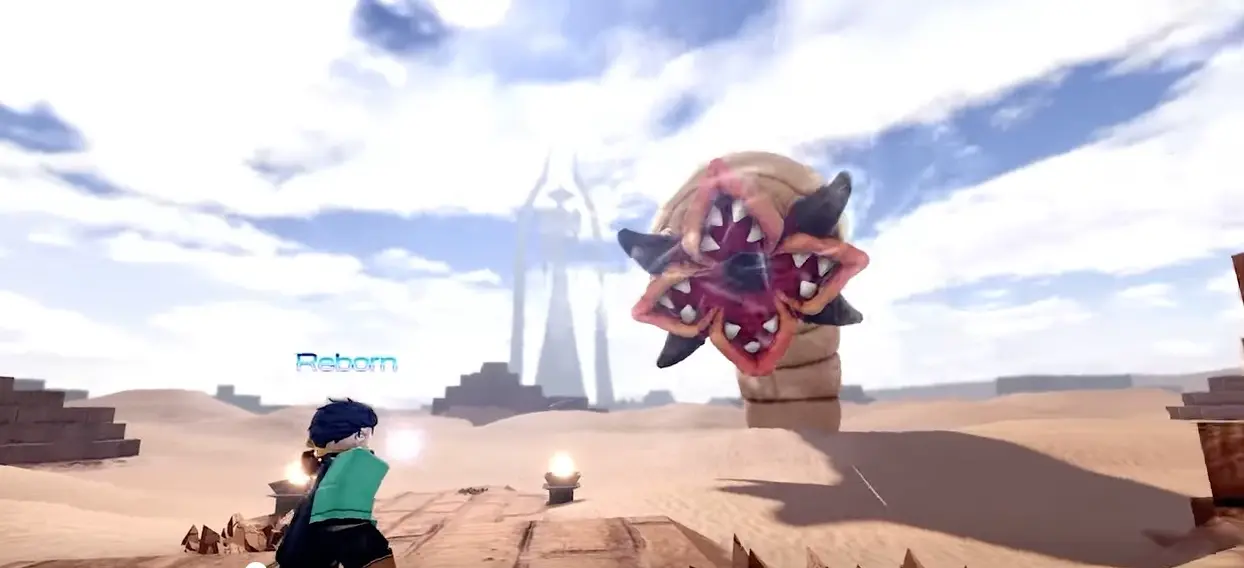
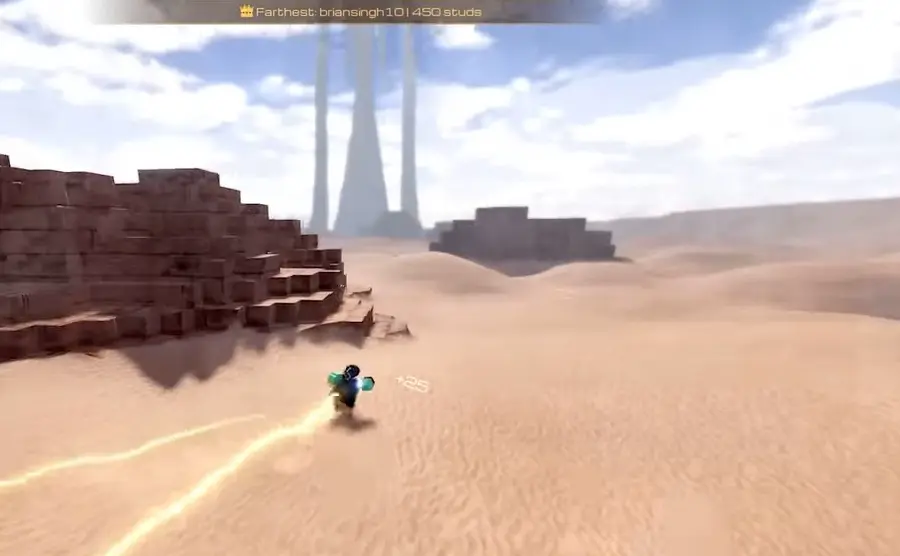
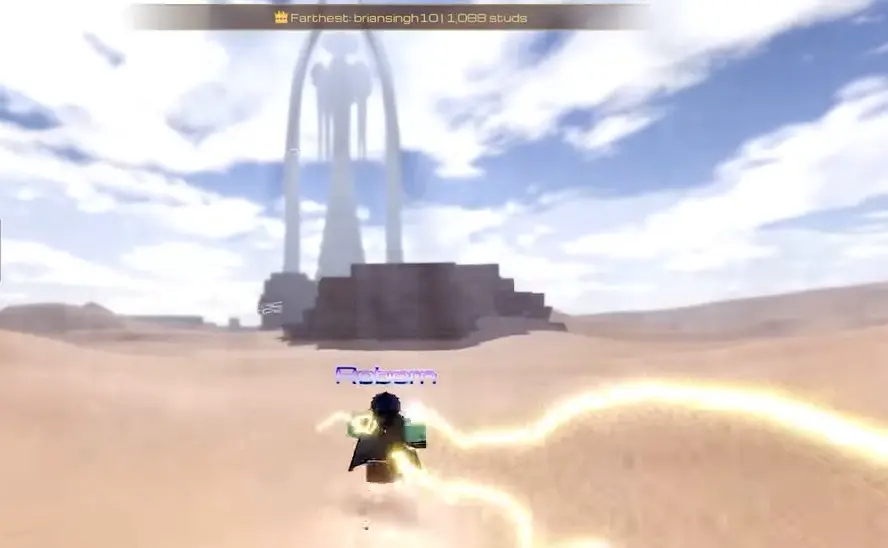
The desert crossing and sandworm encounter illustrate the survival side of the advertised progression loop.
Documented features and questions to consider
| Feature | Documented information | What to consider |
|---|---|---|
| Run loop | Cross the desert toward the Watchtower while facing the deadly light, the tower’s attacks, and the sandworm. | Do repeated attempts and improving a distance record sound enjoyable? Try several runs to judge the pacing. |
| Stat upgrades | The official description names stamina, speed, and Insanity-gain upgrades, plus rebirth for permanent strength. | Compare current prices and displayed effects. Check reset rules before assuming a purchase will survive rebirth. |
| Spirits & Sins | The developer advertises rolls for powerful Spirits and Sins; the checked sources do not provide a complete pool or rates. | Read the current roll interface before spending. Decide whether its available information is enough for your choice. |
| Server and scoreboard | The checked player limit is 15, and the visible Farthest scoreboard measures distance in studs. | A distance record can give you a personal goal. Check in-game for any additional multiplayer features you need. |
| Code rewards | Ten codes were listed as active in the October 2026 checks, with a combined reward of 77,105 Insanity plus Essence. | Confirm code status and compare current upgrade prices. Free rewards alone do not describe the entire shop economy. |
What may appeal to you
If you enjoy setting a personal distance target and adjusting your next attempt, the visible Farthest record gives you a way to follow progress. The advertised stamina, speed, and Insanity-gain upgrades also offer choices to inspect between runs. Try the opening sequence and see whether choosing an upgrade and returning to the desert feels rewarding at the pace the current game offers.
The survival theme also matters to the choice. The official description names the deadly light and the Watchtower’s attacks, while the gameplay imagery shows the sandworm encounter. A player looking for this kind of hazard-driven run can use the tutorial and opening attempts to assess it. Someone seeking a particular combat mode, cooperative system, or collection depth should confirm those features directly before expecting them from the genre label.
What the references do not establish
The checked references do not establish exact rebirth costs, retained currencies or upgrades, a full Spirits and Sins pool, roll rates, or the effects of every paid item. A server limit and a genre classification cannot answer those questions. Check the current menus and developer announcements before planning around an undocumented mechanic, and keep a note of any unclear claim you want the wiki to investigate.
For a suggested introduction to the run loop, use the beginner guide and the first hour plan. Use them to organize a trial session, then judge the gameplay from your own attempts.
FAQ
What genre is Journey to the Watchtower?
Roblox classifies it as Simulation → Incremental Simulator. The official description combines a desert crossing, hazards, stat upgrades, Spirits and Sins rolls, and rebirth for permanent strength. That makes repeated attempts and progression central to the documented gameplay.
What kind of player might enjoy the run loop?
It may suit players who enjoy retrying a challenge, comparing their own distance records, and choosing upgrades between attempts. This is a play-style suggestion based on the listed mechanics. Try the opening runs to judge the pacing and difficulty for yourself.
How many players share a server?
The checked listing allows up to 15 players per server, and the supplied screenshots show a Farthest leaderboard in studs. Those facts describe server size and the visible scoreboard; they do not establish co-op bonuses, trading, or other shared-progression features.
What do free codes add to progression?
The October 2026 code checks list ten active codes granting between 5,000 and 10,000 Insanity each, or 77,105 in total. They can provide upgrade currency when still active and unused on your account. Their value in saved play time depends on the current economy, which the checked sources do not quantify.
Does the free code list prove there are no paid advantages?
No. The references document free code rewards and the advertised progression systems, but they do not provide a complete audit of the current shop or paid items. Check the in-game store and game-pass descriptions before drawing a conclusion about paid advantages.
What should I check before committing to a long session?
Check current upgrade prices, rebirth requirements and resource-retention rules, and the descriptions of Spirits and Sins available to roll. These details are not fully documented in the linked references. The tutorial and current menus are useful starting points; ask the developer community when something remains unclear.
Sources and verification
These links show where this page's factual inputs came from. Community and independent references are not developer announcements.
- Roblox experience listing (Official) - Game identity, creator, player limit and public experience description
- Roblox Games API snapshot (Official) - Visits, favorites, active-player snapshot, creation and update timestamps
- Twinfinite codes list (Community) - Code status cross-check refreshed October 4, 2026 and unchanged in the October 10 check, listing only UPDATE5 and MOUNTS as active — both marked New — and filing SKYBEAST, UPDATE4, UPDATE2, INFINITESNIPE, UPDATE1, BUGFIXES and RELEASE as expired
Page inputs checked .
Recommended guides
Data source: Official Roblox experience description and Games API snapshot, with community code coverage. Last verified .